Understanding a Home Inspector's Role in Contractor Referrals
When you hire a home inspector in Pearland, TX, you are buying one thing above all else: an honest, independent opinion about the condition of a house. So it is fair to ask what happens after the inspection — when the report lists a cracked drain line, an aging water heater, or a roof near the end of its life. Does your inspector hand you a contractor's business card? Should they? And if they do, can you still trust the report? These are exactly the right questions to ask, and the answers tell you a great deal about whether an inspector is truly working for you.
At GC Home Inspection, Chad Langston has inspected homes across Pearland and the Greater Houston area since 1997. Here is a straight answer to how a trustworthy inspector should handle contractor referrals — and how to use your report to get the repairs priced correctly without ever feeling pressured or steered.

Does a home inspector recommend specific contractors?
A good home inspector does not steer you to specific contractors, and they never accept kickbacks for sending you to one. An inspector's job is to evaluate the home's condition and report what they find clearly and objectively. The moment an inspector has a financial stake in the repairs they recommend, their report stops being neutral — and a neutral report is the entire reason you hired them. In Texas, home inspectors are licensed and regulated by the Texas Real Estate Commission (TREC), whose Standards of Practice are built around reporting conditions impartially, not drumming up repair work.
That is the line a reputable Pearland inspector holds. The report describes what is wrong and why it matters. Deciding who fixes it is your call — made on your terms, with your own quotes, after the inspection is done.
Why does an inspector's independence protect you?
An independent inspector protects you because their only incentive is to tell you the truth about the house. Think about what happens when that independence slips. If an inspector earns a referral fee every time they send you to “their guy” for foundation work, there is a quiet pressure to find foundation work — or to describe a minor issue in alarming terms so the repair gets booked. Even if the inspector is honest, the appearance of that conflict undermines the one thing the report is supposed to give you: confidence.
Independence keeps the incentives clean. Chad reports the roof, the electrical panel, the HVAC, the plumbing, and the foundation exactly as he finds them, because he has no stake in whatever happens next. You get an unbiased picture of the home so you can make a clear-eyed decision — buy as-is, negotiate repairs, ask the seller for a credit, or walk away. That is what a real inspection is for.
What is the right way for an inspector to help without steering?
The right way to help is to explain findings plainly and point you toward the type of qualified professional you need — never a single company you are expected to use. There is a meaningful difference between steering and educating. Steering sounds like, “Call this company, tell them I sent you.” Educating sounds like, “This is a wood-destroying-insect finding, so you'll want a licensed pest-control company to evaluate it, and here's what to ask them.”
A trustworthy inspector will:
- Describe the finding in plain language so you understand what it is and how serious it is.
- Tell you what kind of specialist is appropriate — a licensed electrician, a foundation engineer, a licensed plumber, an HVAC contractor — without naming one company you must use.
- Help you understand urgency so you know what is a safety issue, what is routine maintenance, and what can wait.
- Answer your questions after the report so you walk into contractor conversations informed, not confused.
- Stay out of the repair business entirely — no commissions, no kickbacks, no “preferred vendor” markup baked into your decision.
That approach gives you everything you need to act, while leaving the choice of contractor — and the price — firmly in your hands.
How should a buyer use the inspection report to get repair quotes?
Use the report as a shopping list, and get at least two or three independent quotes for anything significant. Your GC Home Inspection report is a detailed, photo-documented record of the home's condition, which means you are not walking into a contractor's office empty-handed or relying on their word for what is wrong. Here is a simple way to use it:
- Separate the big items from the small ones. Flag the findings that could be expensive — roof, foundation, major electrical, HVAC, sewer line — and handle those first.
- Match each major finding to the right licensed trade, then call two or three of them yourself. Competing quotes protect your wallet and tell you quickly if one bid is out of line.
- Share the relevant report pages and photos so every contractor is quoting the same scope. Government resources like HUD and the Consumer Financial Protection Bureau (CFPB) also publish free homebuyer guides that explain how to budget for repairs and negotiate with confidence.
- Share the full report with your real estate agent so they can help you negotiate repairs or a credit with the seller. (This is the one place an agent belongs in the process — representing you, not the inspector.)
Because you chose the contractors yourself, every quote is honest market pricing — not a number inflated by a referral arrangement you never saw.
Why does Chad's background matter here?
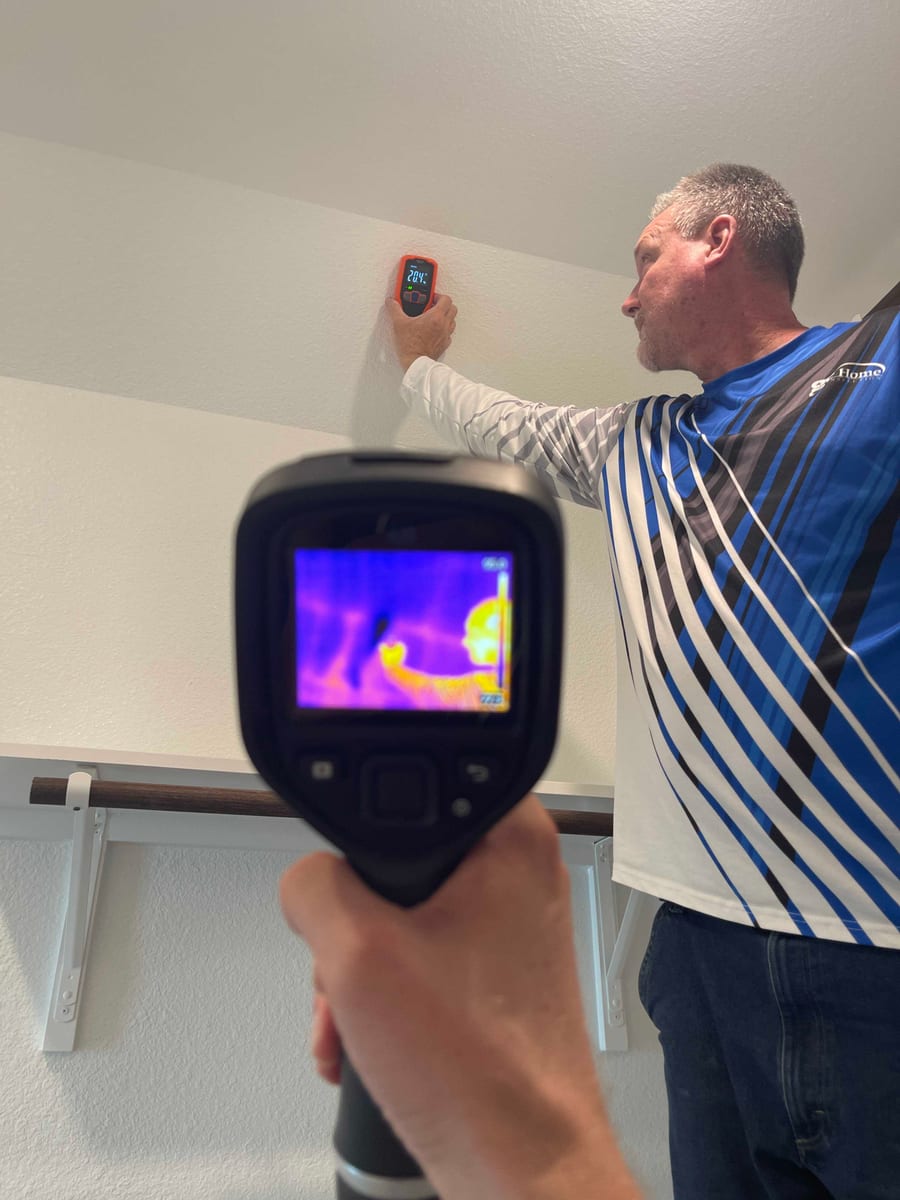
Chad's background matters because he understands construction from the ground up, which lets him describe a defect accurately enough that you can get it priced right. Chad has been around construction since he was 12 years old and has worked in the trades and in home inspection in the Pearland and Greater Houston area since 1997. He is a TREC-licensed professional inspector (Chad — TREC #7946), and GC Home Inspection also includes Greg Langston (TREC #25839) on the team. Chad is a Certified Residential Thermographer (CRT) and uses certified thermal imaging to document hidden temperature and moisture clues that a visual-only inspection can miss.
That hands-on construction knowledge is exactly what keeps the referral conversation honest. An inspector who knows how homes are actually built can tell you whether a crack is cosmetic or structural, whether a wiring issue is a quick fix or a panel replacement — so when you call contractors, you already know roughly what you are dealing with and cannot be oversold. GC Home Inspection reports conditions, explains them, and then gets out of your way so you can make the right call for your family.
Trust the report, choose the contractor yourself
The bottom line: your inspector's job is to tell you the truth about the house, and your decision about who fixes it should always be yours. When you book a Pearland buyer's home inspection with GC Home Inspection, you get an independent, detailed, photo-documented report you can take to any contractor you choose — with no kickbacks, no steering, and no agenda other than helping you buy your home with confidence. That is the standard Chad has held on every home inspection in Pearland, TX since 1997, and it is why Pearland buyers rely on GC Home Inspection. 4.7 Stars ⭐
Schedule your Pearland home inspection
Ready to get an honest, independent read on the home you are buying? Call GC Home Inspection at (281) 675-5885 or schedule your inspection online. We serve Pearland, TX and the Greater Houston area, Monday–Friday, 8:00 AM–5:00 PM.