Winter Home Inspection in Pearland TX: What Holiday-Season Buyers Can See, What They Can't, and How to Close the Gap

Buying a house between Halloween and New Year's is a different experience in south Houston. Fewer buyers are out looking. Sellers who are still on the market in November usually want to be done before the holidays. And the calendar is crowded on every side — Thanksgiving on November 26, family travel, year-end work deadlines, and a closing date that everyone wants to hit before December slips away.
That combination can work in a buyer's favor. But it also changes the inspection itself. A November inspection in Pearland happens in cooler weather, on shorter days, often after the first cold fronts and winter rains have moved through. Some things are easier to see this time of year. A few are harder. Knowing which is which is how you get full value out of the report before you close.
Is It Smart to Buy a Home in Pearland During the Holidays?
For many buyers, yes. Holiday-season listings often come with sellers who are motivated to finish, and fewer competing buyers can mean more time to think and more room to ask for repairs. None of that changes what the house is, though. A roof that needs work in November needs work in April.
The real risk of a holiday purchase is the schedule, not the season. When a closing date is set around travel plans and year-end deadlines, it is tempting to compress the option period, skip a specialist evaluation, or accept "we'll deal with it after the holidays" on items that deserve a closer look now. The inspection is where you slow down on purpose. Here is how a buyer inspection in Pearland TX works.
What Can a November Inspection See Better Than a Summer One?
How the roof and gutters handle rain
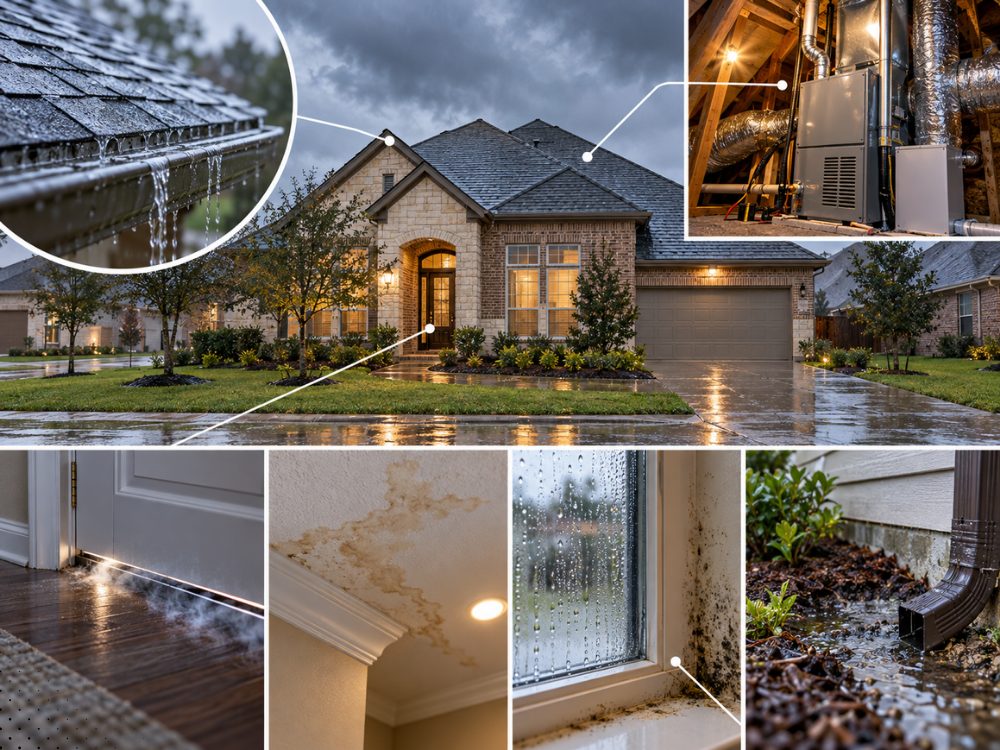
Fall and winter rain in the Houston area gives an inspector a chance to see water in motion — active leaks at the ceiling or in the attic, staining that is fresh rather than old, gutters that overflow, downspouts that dump against the slab, and low spots in the yard that hold water. In a dry July those same problems can be invisible.
The heating system, under real demand
Most Pearland homes use a gas furnace or electric heat in the same attic air handler that ran the cooling all summer. On a cool morning the heat can be operated the way the family will actually use it. An inspector reports on how it responds, the condition of the burners or heat strips where visible, and the venting on gas equipment — flue pipes that have separated, lost their slope or rusted through in the attic.
Drafts, gaps and the building envelope
When it is cooler outside than inside, air leaks and insulation voids become easier to spot, particularly with thermal imaging. Gaps around windows and exterior doors, missing insulation in sections of the attic, and cold spots at exterior walls all show up more clearly than they do in the heat. Ask about thermal imaging and Advanced Moisture Screening when you schedule.
Moisture that summer humidity hides
In a humid Gulf Coast summer, a damp spot can pass for normal. In drier, cooler weeks, moisture that is still present at a wall base, window sill, under a sink or around a tub is more likely to be the real thing — and worth tracing to a source.
What Is Harder to Evaluate in Cooler Weather?
The air conditioning
This is the big one in south Houston. Equipment manufacturers generally caution against running the compressor when outdoor temperatures are low, because it can damage the system. On a cool day, an inspector may be limited to a visual evaluation of the condenser, the refrigerant lines, the air handler and the condensate drainage — and the report will say so.
That note matters. If the report says the cooling could not be operated, talk with your agent about options before the option period ends: an HVAC contractor's evaluation, a repair or service record from the seller, or a return visit on a warmer day if the timing allows. In a market where the air conditioning carries the house from spring to fall, "we'll find out in May" is not a plan.

Yards and exteriors after a cold front
Dormant landscaping and wet soil can make grading harder to read, and a short winter afternoon limits daylight on the roof and exterior. A good inspector will note anything that could not be fully evaluated. Read those limitations as carefully as the findings.
A house staged for the holidays
Decorations, extra furniture, stored gifts and full closets can block access to outlets, walls, the water heater, the electrical panel and the attic hatch. If you are buying in November, ask your agent to request that the seller clear access to the attic, garage, panel and mechanical areas before inspection day.
What Does a Pearland Home Inspection Usually Find This Time of Year?
- Condensate problems left over from summer — a clogged drain line, water in the emergency pan, rust at the air handler.
- Gas venting defects at the furnace and water heater in the attic or closet.
- Missing or expired smoke and carbon monoxide alarms, especially in homes with gas appliances or an attached garage.
- Roof and flashing issues revealed by rain, including worn vent boots and poorly sealed penetrations.
- Drainage toward the slab — the single most useful thing to see in the wet months on Gulf Coast clay.
- Fireplaces and chimneys that have not been used or serviced in years.
How Should Holiday Buyers Plan the Option Period?
- Schedule the inspection the day the contract is signed. Calendars tighten fast around Thanksgiving, and specialist follow-ups take time to book.
- Attend if you can. A walkthrough of findings on site answers questions a report alone cannot.
- Read the limitations section first. Anything that could not be operated or accessed is a question to resolve before your option period ends — not after closing.
- Line up follow-up evaluations early. If the report recommends an HVAC contractor, roofer or foundation evaluation, book it right away.
- Test the heat and the alarms on move-in day. If family is coming for the holidays, confirm the heating works and every smoke and CO alarm sounds before the house fills up. The U.S. Fire Administration publishes current placement and replacement guidance.
What Does a Home Inspection Cover in Texas?
A Texas home inspection follows the TREC Standards of Practice, which set the minimum scope: structural systems, roofing, foundation, exterior and interior, electrical, plumbing, heating and cooling, and insulation and ventilation. It is a visual and operational evaluation — not destructive testing and not a code compliance inspection. Where a system cannot be safely operated or accessed, the report states that limitation so you can decide what to do about it.
Watch: Buying in Pearland This Winter? Don't Miss These Checks
Q&A: What Pearland Buyers Ask About Winter Inspections
Can a home inspection test the air conditioning in winter?
Often not fully. Manufacturers generally caution against running the compressor in cool weather. The inspector evaluates what is visible and notes the limitation, and you can decide with your agent whether an HVAC contractor's evaluation is needed before the option period ends.
Is a winter inspection less thorough than a summer inspection?
No — it is different. Rain, cooler temperatures and a running heating system reveal some conditions more clearly than summer does. A few items, like the cooling system, may be limited. A clear report tells you which is which.
Should I still inspect a newer home in Pearland?
Yes. Newer homes regularly show drainage, attic, flashing and HVAC installation issues that are much easier to address before closing than after.
How soon should I schedule during the holidays?
The day your contract is signed. Option periods are short, and the week of Thanksgiving fills quickly for inspectors, contractors and specialists alike.
Do I need a carbon monoxide alarm in a Pearland home?
If the home has a gas furnace, gas water heater, gas range, fireplace or attached garage, yes. Carbon monoxide has no smell or color, and the weeks when the heat is running and the house is full are when an alarm matters most.
What areas does GC Home Inspection serve?
GC Home Inspection serves Pearland and the south Houston area — including Friendswood, League City, Manvel, Alvin, Missouri City and the surrounding Brazoria, Harris and Fort Bend County communities. Call to confirm availability for your property address.
How long does the inspection take?
Roughly two and a half to four hours on a typical Pearland home depending on square footage, age and the number of systems present. The report includes photographs, condition notes and repair recommendations you and your agent can use immediately.
A holiday-season purchase can be a smart one, as long as the calendar does not rush the inspection. Schedule your home inspection with GC Home Inspection — call Chad at (281) 675-5885, Monday through Friday, 8:00 AM to 5:00 PM.
Already own your home? See the full range of inspection services.